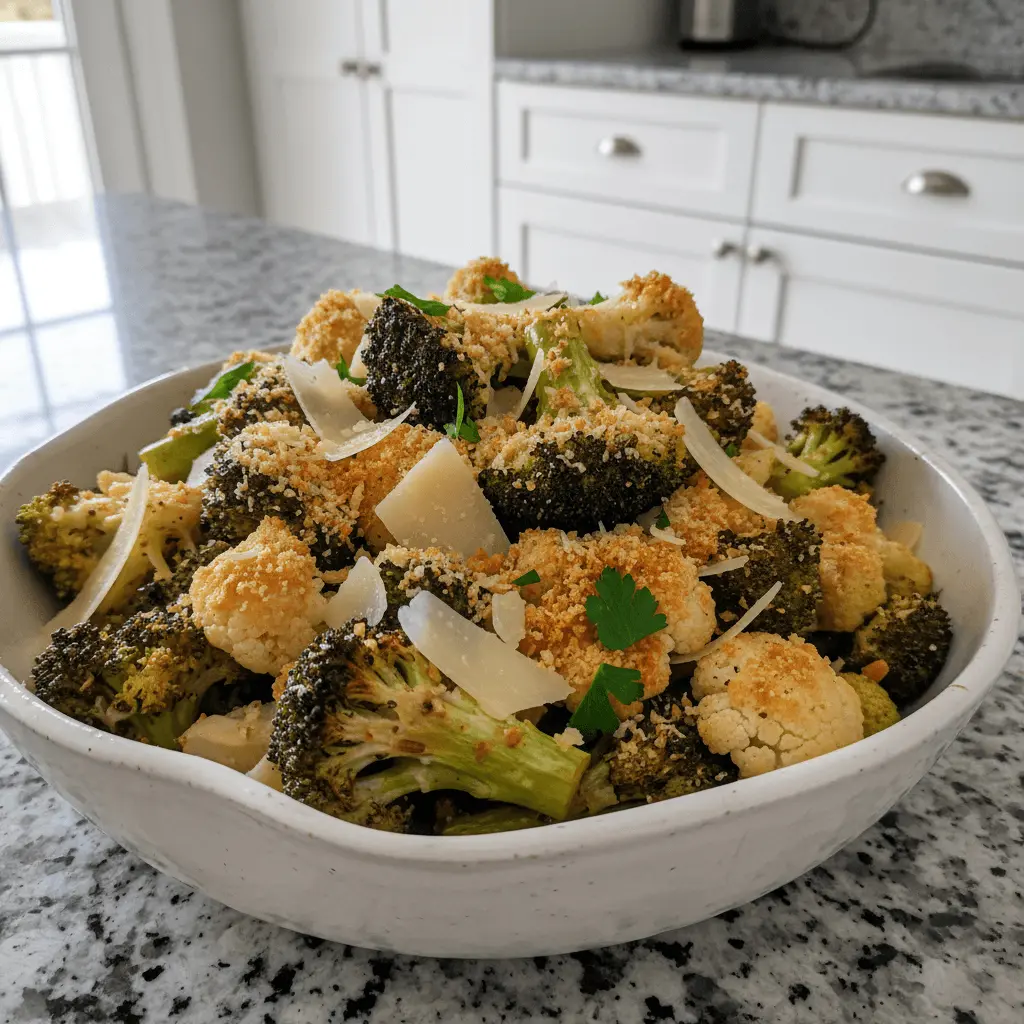
This simple recipe for Roasted broccoli and cauliflower transforms humble vegetables into an irresistible side dish. Featuring savory garlic, crunchy seasoned breadcrumbs, and a generous sprinkle of Parmesan cheese, it’s bursting with flavor. With quick prep and minimal cleanup, this versatile dish easily complements any main course, making it the perfect go-to for busy weeknights or special occasions.
Why You’ll Love This Roasted Broccoli and Cauliflower
You’ll adore this easy Roasted broccoli and cauliflower recipe for so many reasons!
- Quick and Effortless Preparation: Get a delicious side on the table with minimal fuss and active cooking time.
- Customizable with Various Seasonings: Easily adapt the flavors to suit your taste or match your main dish.
- Healthy, Nutrient-Packed Vegetable Side: Enjoy a nutritious boost from these cruciferous vegetables.
- Perfectly Tender-Crisp Texture, Caramelized Edges: Achieve that desirable slightly crispy exterior and tender interior.
- A Crowd-Pleasing, Family-Favorite Recipe: Even picky eaters often enjoy this flavorful and appealing vegetable dish.
Ingredients
Preparing delicious Roasted broccoli and cauliflower starts with fresh, quality ingredients.
- 3/4 pound broccoli florets (about 4 heaping cups)
- 3/4 pound cauliflower florets (about 4 heaping cups)
- 4 large garlic cloves (peeled and sliced thin)
- 3 tablespoons extra virgin olive oil
- 3/4 teaspoon kosher salt
- Black pepper (freshly ground, to taste)
- 2 1/2 tablespoons seasoned breadcrumbs
- 2 1/2 tablespoons grated Parmesan cheese
Notes & Substitutions
- Broccoli & Cauliflower: Always choose firm, vibrant heads without any yellowing or soft spots. Aim for uniform florets for even cooking.
- Garlic: Freshly sliced garlic offers the best, most aromatic flavor compared to pre-minced versions.
- Olive Oil: A good quality extra virgin olive oil enhances the richness and helps the vegetables caramelize beautifully.
- Salt & Pepper: Kosher salt provides a clean, mild salinity. Adjust both to your personal taste preferences.
- Breadcrumbs: Seasoned breadcrumbs add a layer of flavor and crunch. For extra crispiness, consider using Panko breadcrumbs.
- Parmesan: Freshly grated Parmesan cheese melts better and offers a superior, nuttier flavor than pre-shredded options.
- Frozen Vegetables: You can use frozen broccoli and cauliflower, but thaw them completely and pat them very dry before roasting to prevent sogginess. They might require a few extra minutes of cooking time.
Equipment
Gathering your equipment before you start makes cooking a breeze.
- Large baking sheet: Essential for spreading vegetables in a single layer.
- Large mixing bowl: Perfect for tossing vegetables with oil and seasonings.
- Sharp knife: For safely and efficiently cutting florets.
- Cutting board: Provides a stable surface for vegetable prep.
Instructions
Follow these simple steps to create perfectly Roasted broccoli and cauliflower with minimal effort.
- Preheat the oven: Adjust your oven rack to the center position and preheat the oven to 400°F (200°C). This high heat is essential for activating the Maillard reaction, which creates those distinctive browned flavors. This high heat is key for achieving great caramelization.
- Prepare baking sheet: Lightly spray a large baking sheet with oil or line it with parchment paper for easy cleanup.
- Wash and dry vegetables: Thoroughly wash your fresh broccoli and cauliflower florets under cold water. Pat them completely dry with a clean kitchen towel or paper towels. This crucial step prevents steaming and encourages crispiness.
- Cut florets: Using a sharp knife, cut the broccoli and cauliflower into uniform, bite-sized florets. Aim for pieces roughly 1 to 1.5 inches in size so they cook evenly.
- Combine ingredients: Place all the prepared florets into a large mixing bowl. Add the thinly sliced garlic, extra virgin olive oil, kosher salt, and a good grind of black pepper.
- Add coatings: Sprinkle in the seasoned breadcrumbs and half of the grated Parmesan cheese over the vegetables.
- Toss thoroughly: Use your hands or a large spoon to toss everything together. Ensure every floret is evenly coated with the oil, seasonings, breadcrumbs, and cheese mixture.
- Spread on baking sheet: Transfer the coated vegetables to the prepared baking sheet. Spread them out in a single layer, making sure not to overcrowd the pan. Giving them space allows them to roast and crisp, not steam. This ensures your roasted broccoli and cauliflower gets perfectly crispy edges.
- First roast: Place the baking sheet in the preheated oven and roast for 10-15 minutes.
- Toss and continue roasting: Remove the sheet from the oven, gently toss the vegetables with a spatula to promote even browning, and then return to the oven for another 10-15 minutes.
- Check for doneness: Continue roasting until the vegetables are tender-crisp and beautifully browned or caramelized on the edges. The total cooking time for your roasted broccoli and cauliflower will be approximately 20 to 30 minutes, depending on your oven and floret size.
- Finish and serve: Once cooked to perfection, remove the baking sheet from the oven. Immediately sprinkle the remaining grated Parmesan cheese over the hot vegetables. Serve your delicious roasted broccoli and cauliflower while it’s hot and fresh.
Pro Tips for Perfectly Roasted Vegetables
Mastering the art of roasted broccoli and cauliflower is easy with these simple tips:
- Dry vegetables thoroughly before roasting: Excess moisture leads to steaming, resulting in soggy rather than crispy vegetables.
- Cut florets to similar size for even cooking: Uniform pieces ensure everything cooks through at the same rate.
- Avoid overcrowding the baking sheet: Give vegetables space; otherwise, they steam instead of roast and caramelize.
- Use high heat for best caramelization: A 400°F oven is ideal for achieving those delicious browned edges.
- Toss halfway for even browning: This exposes all sides of the vegetables to the hot air, ensuring consistent texture and color.
- Don’t overcook to prevent mushiness: Roasted vegetables should be tender-crisp, not soft or falling apart.
Troubleshooting Common Roasting Issues
Avoid these common issues for perfect roasted broccoli and cauliflower every time:
- Soggy Veggies: This usually means the vegetables were not dry enough, or the pan was overcrowded, trapping moisture.
- Burnt Spots: Unevenly cut pieces, too high a temperature for too long, or forgetting to toss the vegetables halfway can cause this.
- Undercooked: If your vegetables are still hard, they likely need more roasting time or your oven temperature was too low.
Serving, Storage & Variations
This versatile roasted broccoli and cauliflower dish makes an excellent accompaniment to many meals.
Serving Suggestions
Pair your flavorful roasted broccoli and cauliflower with these delicious options:
- Proteins: Enjoy it alongside grilled chicken breast, baked salmon fillets, or a perfectly seared steak for a balanced meal.
- Grains: Serve it over fluffy quinoa, brown rice, or light couscous to create a more substantial dish.
- Other Sides: It complements other roasted delights, like roasted potatoes or sweet potato fries, creating a vibrant vegetable platter.
- Main Meals: Integrate it into grain bowls, pasta dishes, or even omelets for added texture and nutrition.
Storage & Reheating
- Cool completely: Allow any leftover roasted broccoli and cauliflower to cool down fully before storing.
- Store in an airtight container: Place the cooled vegetables in an airtight container in the refrigerator.
- Good for up to 3-4 days: Enjoy your delicious leftovers throughout the week.
- Reheat in oven or air fryer for best texture: For optimal crispiness, reheat at 350°F (175°C) for 5-10 minutes.
- Microwave for quick reheating (may soften): While convenient, the microwave might make the vegetables a bit softer.
Variations
Experiment with your roasted broccoli and cauliflower to create new flavor profiles:
- Lemon Herb: Add the zest of one lemon and a sprinkle of fresh chopped herbs like parsley or dill after roasting.
- Spicy Kick: Include a pinch of red pepper flakes or a dash of cayenne pepper with the seasonings for some heat.
- Asian Twist: Drizzle with a teaspoon of toasted sesame oil and a splash of soy sauce during the last few minutes of roasting.
- Other Veggies: Feel free to add other quick-roasting vegetables such as sliced carrots, bell peppers, or halved Brussels sprouts.
- Cheese Options: Substitute Parmesan with grated Asiago cheese, or use nutritional yeast for a dairy-free cheesy flavor.
- Different Breadcrumbs: Try gluten-free breadcrumbs or herb-infused varieties to change the texture and taste.
Nutrition Information
Research from Harvard Health highlights the significant health benefits of cruciferous vegetables like broccoli and cauliflower, linking their consumption to improved well-being. Both vegetables are excellent sources of dietary fiber, vitamins C and K, and various antioxidants. They contribute to a healthy diet and can support overall well-being.
| Nutrient | Amount Per Serving (Approximate) |
|---|---|
| Calories | 160 |
| Total Fat | 10g |
| Saturated Fat | 2g |
| Cholesterol | 5mg |
| Sodium | 420mg |
| Total Carbs | 12g |
| Dietary Fiber | 4g |
| Sugars | 3g |
| Protein | 6g |
Nutrition values are approximate and may vary based on specific ingredients and preparation methods.
Frequently Asked Questions (FAQ)
- What is the ideal temperature for roasting broccoli and cauliflower? The ideal temperature is 400°F (200°C). This high heat ensures proper caramelization and tender-crisp results.
- How do I prevent my roasted vegetables from becoming soggy? Always pat your vegetables completely dry before tossing with oil, and ensure they are spread in a single layer without overcrowding the baking sheet.
- Can I use frozen broccoli and cauliflower for this recipe? Yes, you can! Just make sure to thaw them fully and pat them very dry to remove excess moisture before proceeding with the recipe.
- Which cooks faster: broccoli or cauliflower? Generally, broccoli florets tend to cook slightly faster than cauliflower, especially if the cauliflower pieces are denser. Cut them to similar sizes for even cooking.
- Why is my roasted cauliflower tough? Tough cauliflower usually means it was undercooked. It might need a few more minutes in the oven or the florets might have been too large to begin with.
- What is the relationship between cauliflower and broccoli? Both cauliflower and broccoli are members of the Brassica oleracea species, making them close relatives within the cabbage family.
Conclusion
This recipe for perfectly Roasted broccoli and cauliflower proves that healthy eating can be incredibly simple and delicious. With just a few ingredients and straightforward steps, you can create a flavorful, tender-crisp side dish that complements almost any meal. Its health benefits, versatility, and ease of preparation make it a must-have in your recipe collection. We encourage you to try this recipe soon; you’ll love how quickly it comes together! We’d also love to hear your thoughts, comments, and any creative variations you try.