“`html
There’s a unique satisfaction in creating food from scratch, and few culinary experiences compare to crafting your own fresh pasta. The simple act of combining flour and eggs transforms into tender, flavorful strands ready to embrace your favorite sauce. This comprehensive guide will walk you through everything you need to know, making it easy for anyone to master delicious fresh pasta recipes at home. Get ready to elevate your meals!
Why You’ll Love This Fresh Pasta Recipe
You’ll discover countless reasons to adore making your own fresh pasta recipes. Each bite offers a superior taste and tender texture that dry pasta simply can’t match. You have complete control, allowing you to customize shapes and even infuse flavors directly into the dough. The process is incredibly rewarding, turning a few basic ingredients into a culinary masterpiece. Best of all, it’s surprisingly simple, proving that delicious homemade food doesn’t need to be complicated.
Ingredients
Gather these kitchen staples to begin your journey into the world of homemade pasta. These basic components are all you need for truly authentic fresh pasta recipes.
- 400g All-purpose Flour: Or “00” flour, for best results.
- 4 Fresh Eggs: Large, around 70g each.
Notes & Substitutions
Flour Types: All-purpose flour works wonderfully, providing a sturdy yet tender pasta. For a silkier, more traditional Italian pasta, opt for “00” flour. For a deeper understanding of this specialized ingredient, explore the unique properties of 00 flour and why it’s favored for pasta. It has a finer grind and lower protein content, resulting in a very smooth dough.
Egg Size: Egg size significantly impacts dough hydration. If your eggs are smaller, you might need a few drops of water. If larger, a touch more flour might be necessary.
Dough Adjustments: For a very dry dough, add water sparingly, a teaspoon at a time. If it feels too sticky, gradually incorporate a bit more flour until it reaches the desired consistency.
Gluten-Free Options: While traditional pasta relies on wheat flour, you can experiment with gluten-free flour blends. Look for blends specifically designed for baking or pasta making, as they often contain binders like xanthan gum to mimic gluten’s elasticity.
Equipment
Making pasta doesn’t require a vast array of tools. Here are the essentials for creating your own fresh pasta recipes:
- Large mixing bowl or clean work surface
- Fork, bench scraper
- Rolling pin (optional, if using a machine)
- Pasta machine (manual or electric)
- Plastic wrap, kitchen towels
- Large pot for boiling
Instructions
Follow these clear steps to create beautiful fresh pasta recipes from scratch. This process is designed to be beginner-friendly, ensuring delicious results every time.
Form the Dough Well: Start by mounding the 400g of flour directly onto a clean work surface or inside a large bowl. Use your fingers to create a deep well in the center, like a nest. This “fontana” will hold your eggs.
Add Eggs: Carefully crack the four fresh eggs into the well. Using a fork, gently begin whisking the eggs, gradually incorporating small amounts of flour from the inner walls of the well. Work slowly to prevent the eggs from spilling out. If they start to escape, quickly use your fork or hands to pull the flour back in to form a barrier.
Incorporate Flour: Continue whisking the eggs and gradually pulling in more flour from the sides until a shaggy, wet dough forms. At this point, switch from the fork to your hands.
Knead the Dough: Push the dough away with the heel of your hand, then fold it back towards you. Rotate the dough slightly and repeat. Knead vigorously for at least 10–15 minutes. This vigorous kneading is essential for building the gluten structure in pasta dough. This develops the gluten, making the pasta elastic and smooth. If the dough feels too dry, wet your hands with a few drops of water and continue kneading. If too sticky, add a tiny pinch of flour.
Check Dough Consistency: The dough should transform from rough and sticky into a smooth, firm, and elastic ball that springs back when gently pressed. It should no longer stick to your hands or the work surface.
Rest the Dough: Wrap the dough ball tightly in plastic wrap to prevent it from drying out. Let it rest at room temperature for a minimum of 30 minutes. This resting period is crucial; it relaxes the gluten, making the dough much easier to roll.
Prepare for Rolling: After resting, unwrap the dough. Cut a small portion, about a quarter, from the main dough ball. Immediately re-wrap the remaining dough to keep it from drying out while you work.
Flatten Dough: Lightly flour your work surface and the small dough portion. Use a rolling pin to flatten the dough into an oval disk, roughly thick enough to fit into your pasta machine.
Use Pasta Machine: Set your pasta machine to its widest setting (usually 0 or 1). Feed the flattened dough disk through the rollers. This begins the thinning process for your homemade fresh pasta recipes.
Fold and Re-roll: Take the dough sheet that came out, fold both ends towards the center like a letter, forming a roughly rectangular shape. Lightly flour it again. Pass this folded dough through the widest setting of the pasta machine once more. Repeat this folding and re-rolling step 2–3 times. This step helps to create a uniform, strong sheet of pasta.
Gradually Thin Pasta: Now, without folding, reduce the pasta machine setting by one notch (e.g., from 1 to 2). Pass the dough sheet through. Continue reducing the setting incrementally, passing the dough through each setting once, until you reach your desired thickness. For most shapes like tagliatelle, settings 6 or 7 are ideal.
Desired Thickness: Roll until the pasta sheet is thin enough to be slightly translucent, but still sturdy. Once you reach the desired thickness, lay the pasta sheet gently on a lightly floured surface. Continue rolling the remaining dough portions in the same manner.
Cut Pasta Shapes: If your pasta machine has cutter attachments (for tagliatelle, fettuccine, spaghetti), feed your pasta sheets through them, lightly flouring the sheet first to prevent sticking. Alternatively, use a sharp knife to cut desired shapes like lasagna sheets or ravioli squares. If making strands like tagliatelle, avoid piling them up immediately.
Dry Pasta Properly: Lay the freshly cut pasta strands or shapes on a lightly floured surface, a clean kitchen towel, or a pasta drying rack. This prevents them from sticking together. Don’t fold fresh tagliatelle onto themselves for drying, as they will clump. Let them air dry for 15-30 minutes before cooking.
Boil Fresh Pasta: Bring a large pot of generously salted water to a rolling boil. Carefully add your fresh pasta. Cook for a very short time, usually just 1-2 minutes, until al dente. Fresh pasta cooks much faster than dried pasta. Drain and serve immediately with your favorite sauce.
Pro Tips & Troubleshooting
Kneading Technique: The key to a good dough is vigorous kneading. Use your body weight, pushing with the heel of your hand, folding, and rotating. This process builds the gluten structure essential for elastic pasta.
Dough Texture: If your dough is too sticky, add a tiny bit more flour. If it’s too dry and crumbly, mist your hands with a few drops of water and continue kneading. Adjustments should always be gradual.
Resting Time: Don’t skip the resting step! It allows the gluten to relax, making the dough much easier to roll and less prone to tearing. A well-rested dough yields superior fresh pasta recipes.
Prevent Sticking: Flour your work surface, dough, and finished sheets generously. This is crucial at every stage, especially during rolling and cutting, to prevent the pasta from sticking to itself or the machine.
Cooking Time: Fresh pasta cooks incredibly fast. Keep a close eye on it, usually 1-2 minutes is enough. Taste a piece to ensure it’s perfectly al dente.
Drying Pasta: After cutting, lay pasta out in a single layer or hang it. If pasta dries too slowly or is piled up, it will stick together. Ensure good airflow.
Serving, Storage & Variations
Once you’ve mastered the basics, explore the versatility of your homemade pasta. These fresh pasta recipes are just the beginning!
Pasta Shapes
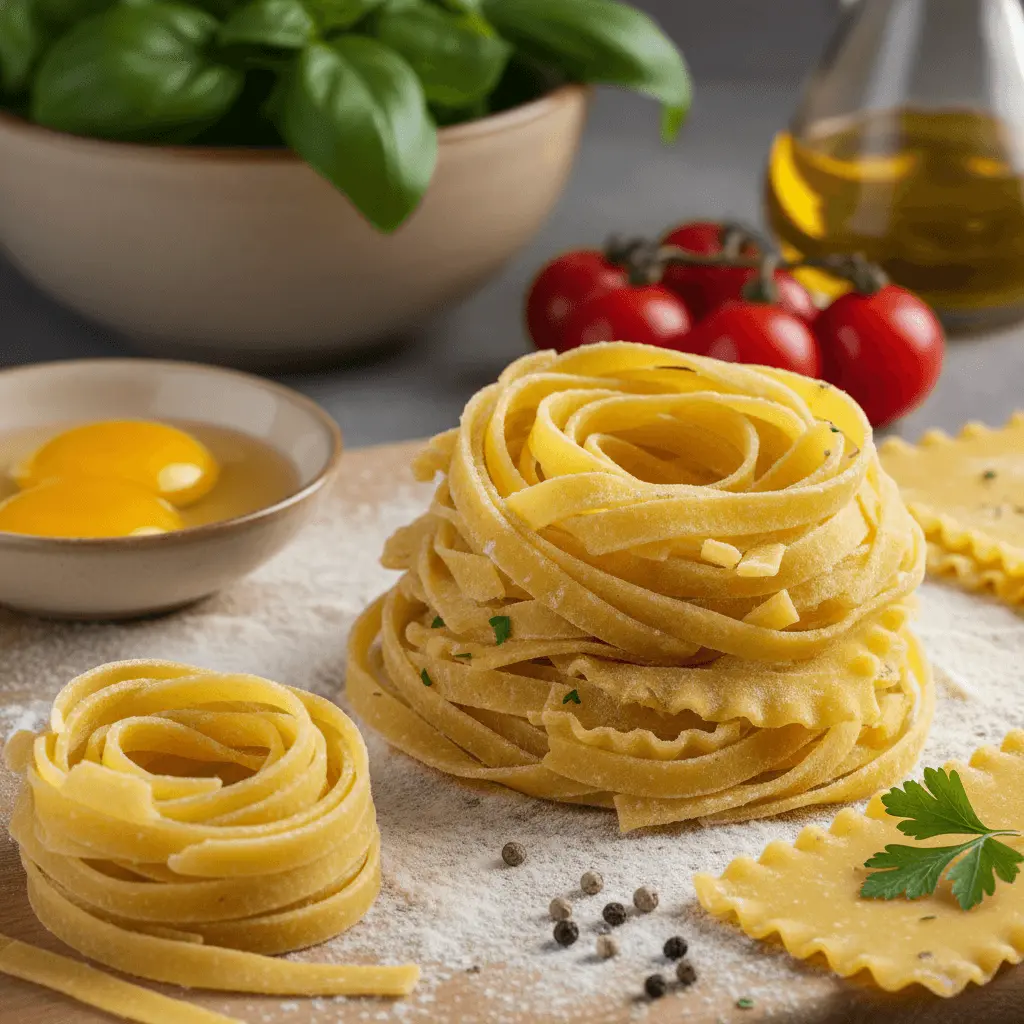
The beauty of homemade pasta is the freedom to create various shapes. Classic options include tagliatelle (wide flat ribbons), fettuccine (slightly narrower ribbons), and spaghetti (thin round strands). You can also cut wider sheets for lasagna or squares for ravioli and tortellini.
Sauce Pairings
Fresh pasta shines with a variety of sauces. A simple Bolognese or a light butter and sage sauce allows the pasta’s flavor to come through. Creamier sauces, such as Alfredo, or fresh pesto also pair beautifully. Consider seafood sauces or vegetable-based options like roasted red pepper or a fresh tomato marinara for lighter fare.
Storage Options
Immediate Use: Cook your fresh pasta immediately after cutting for the best taste and texture.
Short-Term Drying: For use within 1-2 days, lightly dry the pasta on a rack or floured surface until it feels firm and no longer sticky (about 30-60 minutes). Store it loosely covered in the refrigerator.
Freezing Fresh Pasta: For longer storage, allow the pasta to dry completely (several hours or overnight) until brittle. You can then gently coil individual nests or lay flat sheets in an airtight container or freezer bag. Freeze for up to one month. Cook directly from frozen in boiling salted water, adding an extra minute to the cooking time.
Nutrition Information
This estimated nutrition information is for one serving of your homemade fresh pasta recipes based on 4.4 servings from the provided ingredients. Values can vary based on specific brands and exact preparation methods.
| Nutrient | Amount Per Serving |
|---|---|
| Calories | ~409 kcal |
| Protein | ~17g |
| Total Fat | ~7g |
| Carbohydrates | ~69g |
| Sugars | ~1g |
| Sodium | ~20mg |
Disclaimer: These are estimated values and may vary based on ingredients and preparation. Please consult a professional for exact dietary advice.
FAQ
What type of flour is best for fresh pasta recipes?
“00” flour is traditional and creates a very silky pasta. All-purpose flour is a great, accessible alternative that also yields excellent results.
Can I make pasta without a machine?
Absolutely! A good rolling pin and plenty of elbow grease can produce delicious pasta sheets. You just need patience and practice to roll it thinly and evenly.
How long does fresh pasta last?
Freshly made pasta can be cooked immediately, or dried for a few hours and stored in the fridge for 1-2 days. For longer storage, you can freeze dried fresh pasta for up to a month.
Why is my pasta dough too hard/sticky?
A hard dough needs more hydration; wet your hands and keep kneading. A sticky dough needs more flour; add it gradually, a pinch at a time, until smooth.
Can I add flavorings to the dough?
Yes! You can incorporate ingredients like spinach puree for green pasta, beetroot juice for red, or even herbs like parsley or basil directly into the dough for unique flavors and colors.
Conclusion
There’s nothing quite like the satisfaction of creating your own fresh pasta recipes from scratch. From the moment flour and eggs transform into a supple dough, to rolling and cutting perfect strands, the process is therapeutic and incredibly rewarding. We hope this guide empowers you to bring the authentic taste of homemade pasta to your table. Dive in, experiment, and enjoy the endless versatility and deliciousness that only fresh pasta can offer!
“`