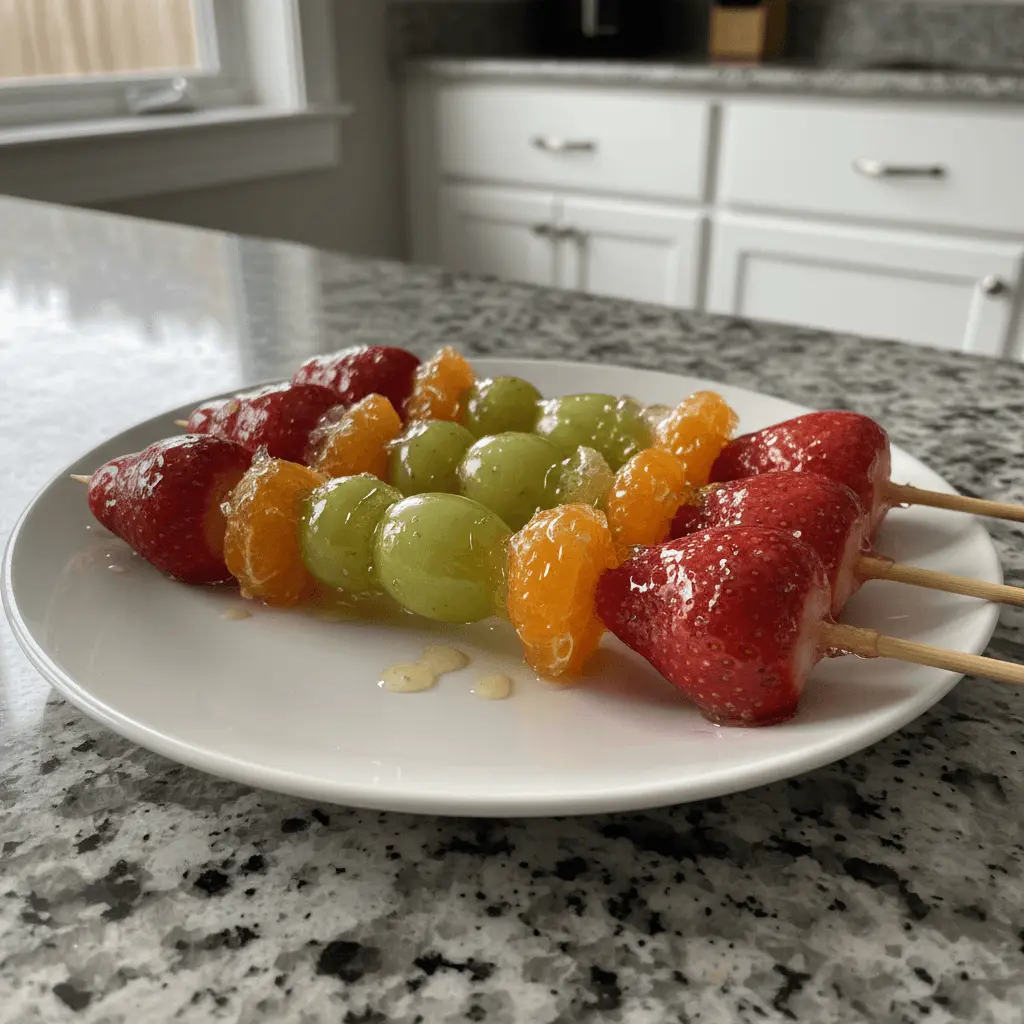
Discover the magic of Tanghulu, a delightful traditional Chinese candied fruit snack. This recipe guides you to create an irresistible treat with a hard, glassy sugar shell that perfectly encases juicy, fresh fruit. You can easily make this impressive dessert at home with just a few simple ingredients. Master the technique and impress everyone with your homemade Tanghulu candied fruit.
Why You’ll Love This Tanghulu Recipe
This sweet and crunchy snack is easier to make than you think!
- Incredible Texture: Enjoy the satisfying crisp-sweet crackle of the candy shell, followed by the burst of fresh fruit inside.
- Simple Ingredients: You only need fruit, sugar, and water to create this stunning confection.
- Visually Stunning: The glossy, jewel-like appearance of Tanghulu makes it a festive and eye-catching treat for any occasion.
- Fun to Make: The process is engaging and rewarding, perfect for a kitchen adventure with family.
- Customizable: Easily swap fruits to suit your preferences or seasonal availability.
Ingredients for Tanghulu Candied Fruit
Crafting perfect Tanghulu candied fruit starts with selecting the right ingredients. For a delicious batch, you will need:
- 1 pound fresh fruit (I used a combination of strawberries, mandarin slices, and grapes)
- 3 cups granulated white sugar
- 1 1/2 cups water
Notes & Substitutions
Always select firm, non-watery fruits. Strawberries, grapes, mandarin slices, kiwi, and crab apples are excellent choices as they hold their shape well. Ensure your fruit is at its peak freshness for the best flavor and texture.
For the candy coating, you must use granulated white sugar. Avoid cane sugar or alternative sweeteners, as they may crystallize or burn differently, preventing the desired hard, glassy finish. Precision is crucial for the sugar syrup to reach the perfect hard crack stage. Stick to the exact measurements provided for the best results.
Essential Equipment
Having the right tools makes all the difference when creating perfect Tanghulu candied fruit. Gather these items before you begin:
- Medium stainless steel pot: Essential for even heat distribution.
- Reliable candy or digital thermometer: Crucial for precise temperature control.
- Wooden or bamboo skewers: For dipping and holding the fruit.
- Large bowl for ice water: To quickly set the candy coating.
- Parchment-lined baking sheet: For cooling the finished candied fruit.
How to Make Tanghulu Candied Fruit (Step-by-Step)
Creating this delightful Tanghulu candied fruit is a rewarding process. Follow these steps carefully to achieve that signature crisp and glossy finish.
Prepare the Fruit
First, prepare your chosen fruits. Wash all fruit thoroughly under cold running water to remove any dirt or residue. Next, pat every piece of fruit completely dry using paper towels. Even a tiny bit of moisture can cause the sugar syrup to crystallize, so this step is crucial. Finally, carefully skewer 1-3 pieces of fruit per stick, depending on their size, making sure they are secure.
Make the Sugar Syrup
Combine the granulated white sugar and water in your medium stainless steel pot. Place the pot over a medium flame. Do NOT stir the mixture initially, as stirring can introduce air bubbles and trigger premature sugar crystallization. Heat the syrup steadily, constantly monitoring the temperature with your candy or digital thermometer. Understanding the different stages of sugar in candy making is crucial for achieving the desired texture. The goal is to reach exactly 300°F (150°C), which is the hard crack stage. This temperature ensures the sugar shell becomes perfectly crisp and glassy when cooled.
Candying the Fruit
Once the sugar syrup reaches 300°F, immediately remove it from the heat. Working quickly, carefully dip each skewered fruit into the hot syrup. Rotate the skewer to coat the fruit evenly and thinly on all sides. A thick coating will make the candy too brittle and hard to eat. Immediately after coating, transfer the candied fruit to a large bowl filled with ice water for just a few seconds. This rapid cooling helps the sugar shell to set instantly and become beautifully glossy.
Finishing Touches
After the brief ice bath, gently remove the skewered fruit. Place the finished Tanghulu candied fruit on your parchment-lined baking sheet to fully set and cool. Continue working with a few skewers at a time, ensuring you maintain the syrup’s temperature if necessary by briefly returning it to low heat. Aim for a smooth, glossy candy coating on all your fruits. This entire process requires speed and precision for the best results.
Pro Tips for Perfect Tanghulu
Achieving perfect Tanghulu requires attention to detail. Follow these expert tips for success:
- Bone-Dry Fruit: Ensure your fruit is absolutely dry. Any moisture will cause the sugar syrup to crystallize, ruining the texture.
- Stainless Steel Pot: Use a stainless steel pot, as it distributes heat evenly and helps prevent the sugar from burning or crystallizing on the sides.
- No Stirring: Resist the urge to stir the sugar and water mixture once it begins to heat. Stirring is a primary cause of sugar crystallization.
- Accurate Thermometer: A reliable candy or digital thermometer is essential. The syrup must reach precisely 300°F (hard crack stage) for the coating to harden correctly.
- Speed is Key: Work quickly when dipping and cooling the fruit. The sugar syrup cools rapidly, becoming too thick if you delay.
- Prep Ahead: Have your ice bath ready and your baking sheet lined with parchment paper before you start heating the sugar.
Troubleshooting Common Issues
Even experienced cooks encounter challenges. Here’s how to troubleshoot common Tanghulu problems:
- Not Hardening: If your Tanghulu doesn’t harden, the sugar syrup likely did not reach the crucial 300°F hard crack stage. Reheat the syrup slowly and re-check the temperature.
- Crystallization: Understanding the chemistry of sugar in candy making can help prevent common issues. This is often caused by stirring the syrup, impurities in your ingredients, or using an incorrect pot material, such as an enamel pan.
- Sticky Tanghulu: Your candy might be sticky due to insufficient cooling after dipping or high humidity in your environment. Try a colder ice bath.
- Cleaning the Pot: Don’t scrub a hardened sugar pot. Instead, fill it with hot water and let it sit; the sugar will dissolve easily.
Serving, Storage, and Variations
Enjoying your freshly made Tanghulu is the best part!
Serving Suggestions
For optimal crispness and flavor, enjoy your Tanghulu immediately after it sets. Serve it as a delightful and unique dessert after a meal, or offer it as a fun, vibrant snack for parties and gatherings. The beautiful glossy finish makes it a stunning centerpiece on any dessert table.
Storage Tips
Tanghulu is best consumed within a few hours of making it. The candy coating is highly sensitive to humidity, which can cause it to become sticky and lose its crunch. If you must store it for a very short period, place it in an airtight container at room temperature. Avoid refrigeration, as the moisture inside a refrigerator will quickly make the candy sticky and soft.
Fruit Variations
Get creative with your Tanghulu! While strawberries and grapes are classics, many other fruits work beautifully. Try crisp apple slices, sweet blueberries or tart cherries for different flavor profiles. Experiment with various citrus segments, ensuring they are thoroughly dried. Consider exotic fruits like firm pineapple or mango chunks for a tropical twist. Choose fruits that are not overly watery to ensure the best coating.
Tanghulu Candied Fruit Nutrition Information
Here is an approximate nutritional breakdown for one serving of this Tanghulu candied fruit recipe:
| Nutrient | Amount |
|---|---|
| Calories | 642 kcal |
| Carbohydrates | 166g |
| Protein | 1g |
| Fat | 1g |
| Saturated Fat | 0.01g |
| Sodium | 12mg |
| Potassium | 104mg |
| Fiber | 2g |
| Sugar | 162g |
| Vitamin A | 342 IU |
| Vitamin C | 2mg |
| Calcium | 10mg |
| Iron | 0.4mg |
Disclaimer: Nutrition information is an approximation based on ingredients and is for informational purposes only.
Frequently Asked Questions (FAQ)
- Why isn’t my Tanghulu hardening?
The sugar syrup likely didn’t reach the hard crack stage, which is precisely 300°F. Use a reliable thermometer to ensure accuracy. - Why did my sugar crystallize?
Crystallization is usually caused by stirring the syrup, impurities in your sugar, or using an improper pot material like enamel, which has an uneven surface. - What kind of fruit is best for Tanghulu?
Firm, less watery fruits work best, such as strawberries, grapes, mandarins, kiwi, or crab apples. Ensure they are completely dry. - How long does Tanghulu stay crunchy?
For optimal crunch, consume Tanghulu within an hour or two. Humidity rapidly causes the sugar coating to soften and become sticky. - Is Tanghulu gluten-free?
Yes, this delightful Tanghulu recipe is naturally gluten-free, making it a suitable treat for those with gluten sensitivities.
Conclusion
Embrace the delightful crunch and sweetness of homemade Tanghulu. With simple ingredients and a bit of practice, you can achieve impressive results every time. This unique candied fruit snack is a fun, vibrant treat perfect for any occasion, from family desserts to festive gatherings. Give this recipe a try and create your own batch of glassy, delicious Tanghulu. We love hearing about your creations! Share your experience, leave a rating, and let us know your favorite fruit combinations.