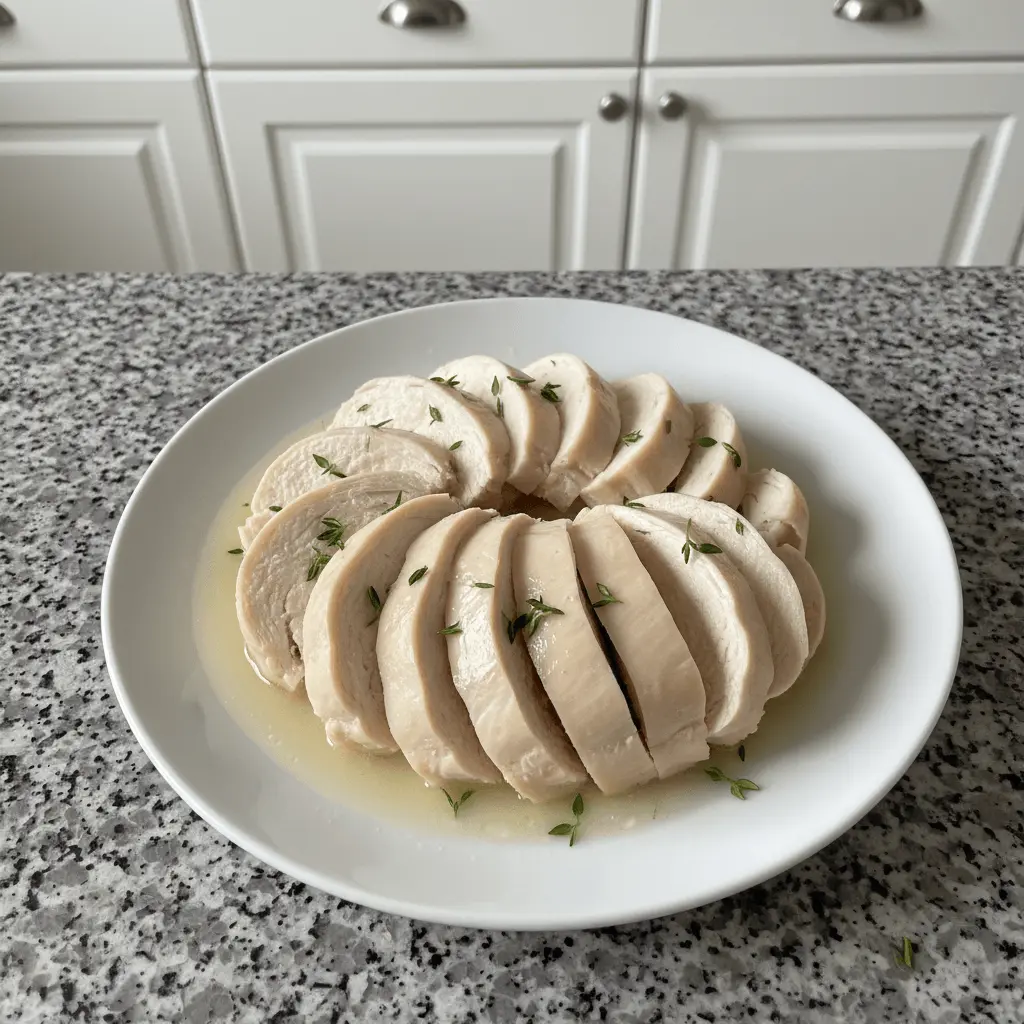
Unlock the secret to consistently moist and tender chicken with our easy guide to “boiled chicken recipes.” While we call it boiling, the technique is actually gentle poaching, ensuring your chicken stays juicy every time. A guide from Bon Appétit further explains why gentle poaching is ideal for tender results. This versatile method is perfect for preparing chicken that shines in countless dishes, making meal prep a breeze for busy parents and beginners alike.
Why You’ll Love These Boiled Chicken Recipes
- Consistently Moist Texture: Achieve tender, succulent chicken without the risk of drying it out.
- Effortless Cooking: Enjoy a hands-off process, freeing you up for other kitchen tasks or family time.
- Customizable Flavors: Infuse your chicken with various aromatics for a personalized taste profile.
- Flavorful Homemade Broth: The cooking liquid transforms into a rich, savory broth, perfect for soups.
- Excellent for Meal Prep: Prepare a batch once and have ready-to-use chicken for days.
Ingredients
To create these simple boiled chicken recipes, you need just a few staple items. Feel free to adjust quantities based on your needs.
- 1 to 4 boneless, skinless chicken breasts (roughly 12 ounces each)
- 1 teaspoon salt
- Optional seasonings for enhancing flavor: smashed garlic, bay leaf, whole peppercorns, sliced fresh ginger, lemon or orange slices, sliced onions or celery, fresh rosemary, fresh thyme.
Notes & Substitutions
You can easily adapt these boiled chicken recipes to fit different chicken cuts. Boneless, skinless chicken thighs work wonderfully, though cooking times will vary slightly. Feel free to use bone-in, skin-on chicken for a richer broth, just remove the skin after cooking if preferred. Experiment with various seasonings to create different flavor profiles, such as a touch of soy sauce or star anise for an Asian twist. Always adjust the salt to your personal taste and dietary needs.
Equipment
You don’t need fancy tools to master these simple boiled chicken recipes. Gather these essentials:
- A large saucepan or pot: Choose one big enough to hold your chicken in a single layer.
- An instant-read thermometer: Essential for checking internal temperature accurately.
- Tongs: For safely transferring chicken in and out of the hot liquid.
- A cutting board and sharp knife: For preparing and processing the cooked chicken.
Instructions
Follow these simple steps to make perfect boiled chicken recipes every time. This method ensures tender, flavorful results without fuss.
Step 1: Prepare Chicken in Pot
Place your boneless, skinless chicken breasts in a large saucepan or pot. Arrange the chicken in a single layer. It’s perfectly fine if the pieces overlap a little, as long as they fit comfortably in the pot.
Step 2: Add Liquid and Flavorings
Cover the chicken with cold water, ensuring the liquid rises about one inch above the chicken. Stir in the salt thoroughly until it dissolves. Now, add any optional seasonings you’d like to use. These aromatics will infuse the chicken with wonderful flavor as it cooks.
Step 3: Bring to a Gentle Boil
Heat the pot over medium-high heat until the water comes to a gentle boil. As the water heats, you might observe foam collecting on the surface. If you plan to use the cooking liquid as broth, you can skim this foam off. Otherwise, leaving it is perfectly fine.
Step 4: Simmer Until Cooked Through
Once the water reaches a boil, immediately reduce the heat to low. Cover the pot tightly with a lid. Allow the chicken to gently simmer for 8 minutes. After 8 minutes, begin checking the chicken for doneness. Thin chicken cutlets may be ready around 8 minutes, while larger chicken breasts could take up to 15 minutes. The chicken is cooked when an instant-read thermometer inserted into the thickest part registers 165°F (74°C). The USDA recommends this safe minimum internal temperature for all poultry. You can also make a small cut into the thickest part to visually confirm it’s cooked through with no pink remaining. Continue cooking and checking the chicken every minute or so until it reaches the correct internal temperature.
Step 5: Cool, Shred or Slice
Once the chicken is fully cooked, carefully remove it from the hot broth using tongs. Place the chicken on a plate or cutting board to cool slightly. Once it’s cool enough to handle comfortably, you can shred or slice the chicken as needed for your desired recipe. Use it immediately, or allow it to cool completely before storing.
Pro Tips & Troubleshooting
- Always use a meat thermometer: This is the most accurate way to ensure your chicken reaches a safe internal temperature of 165°F (74°C) without overcooking.
- Avoid overcooking: Overcooking is the main cause of dry, rubbery chicken. Remove it as soon as it reaches 165°F.
- Use residual heat: Remove the pot from the heat and let the chicken rest in the hot broth for a few minutes after it’s cooked. This helps keep it incredibly juicy.
- Shred with ease: For quick shredded chicken, place the cooked chicken breasts in a large bowl and use a hand mixer on low speed. It works wonders!
- Experiment with aromatics: Don’t be shy about trying different combinations of herbs, spices, and vegetables in your boiled chicken recipes.
- Frozen chicken: For best results, thaw chicken thoroughly before cooking. If you must cook from frozen, increase the simmering time by about 50%, ensuring it reaches 165°F.
Serving, Storage & Variations
These tender boiled chicken recipes provide a fantastic base for numerous meals.
Serving Suggestions
- Salads: Shredded chicken is perfect in a Cobb, Caesar, or Panzanella salad.
- Sandwiches & Wraps: Make delicious chicken salad sandwiches or fill a healthy wrap.
- Soups & Stews: Add to chicken noodle soup, tortilla soup, or hearty stews for extra protein.
- Main Dishes: Fill burritos, enchiladas, tacos, or casseroles.
- Sides: Serve alongside rice, quinoa, or other grains for a complete meal.
- Pasta Dishes: Mix into creamy pasta sauces or baked ziti.
Storage Instructions
- Refrigerate: Store cooked, shredded, or sliced chicken in an airtight container in the refrigerator for up to 5 days.
- Freeze: For longer storage, freeze cooked chicken in freezer-safe bags or containers for up to 3 months.
- Broth: Don’t discard the flavorful poaching liquid! Strain it and freeze in portions for homemade chicken broth, ideal for future soup bases.
Variations
- Chicken Thighs: For boneless chicken thighs, simmer for about 10 minutes. Bone-in chicken thighs will require around 15-20 minutes. Always check for 165°F.
- Flavor Profiles:
- Asian: Add sliced ginger, garlic, star anise, and a splash of soy sauce to the poaching liquid.
- Mediterranean: Incorporate lemon slices, fresh oregano, bay leaf, and a few olives.
- Herby: Use generous amounts of fresh rosemary, thyme, and parsley for an aromatic flavor.
Nutrition
Enjoying these simple boiled chicken recipes offers a lean and healthy protein source. Here’s an estimated nutritional breakdown per 4-ounce serving of boneless, skinless chicken breast:
| Nutrient | Amount |
|---|---|
| Calories | 189 kcal |
| Total Fat | 4g |
| Carbohydrates | 0g |
| Protein | 35g |
Please note: These values are approximate and can vary based on specific ingredients, preparation methods, and portion sizes. This information is intended for general guidance.
FAQ
- What is the difference between boiling and poaching chicken?
True poaching involves cooking in liquid just below a simmer, while boiling is at a full, rolling boil. For tender results, what people often call “boiled chicken recipes” actually uses a gentle poaching or simmering method to prevent toughness.
- How long should I boil chicken breasts?
Cook thin chicken breasts or cutlets for about 8 minutes, while larger, thicker breasts may need up to 15 minutes. Always check for an internal temperature of 165°F (74°C).
- Can I boil frozen chicken?
It is best to thaw chicken thoroughly before cooking for even results. If cooking from frozen, increase the simmering time by about 50% and always verify the internal temperature.
- What can I do with the leftover poaching liquid?
The flavorful liquid is excellent as a homemade chicken broth for soups, stews, or gravies. You can also use it to cook rice or other grains, adding extra depth of flavor.
- How do I prevent rubbery boiled chicken?
The key is to avoid overcooking and to use a gentle simmer rather than a hard boil. Always remove the chicken from the heat once it reaches 165°F and let it rest briefly.
Conclusion
Mastering these boiled chicken recipes is a game-changer for any home cook, especially for busy parents and beginners seeking simple solutions. This method consistently delivers exceptionally tender and juicy chicken, making it incredibly versatile for countless meals. It’s an ideal component for meal prepping, allowing you to whip up healthy dishes throughout the week with minimal effort. Add this straightforward technique to your cooking repertoire and enjoy the benefits of perfectly cooked chicken every time. Give these easy recipes a try tonight!