Pasta often carries an unfair reputation, mistakenly labeled as unhealthy. However, when crafted mindfully, pasta dishes become a cornerstone of a truly balanced diet. It’s time to debunk those myths and embrace the incredible versatility of healthy pasta recipes. The truth is, when prepared correctly, pasta can be a nutritious component of a healthy eating pattern, as detailed by culinary and nutrition experts. pasta’s role in a healthy diet These wholesome meals offer satisfying flavors and essential nutrients, proving that your favorite comfort food can absolutely be a part of a vibrant, health-conscious lifestyle.
Why You’ll Love Healthy Pasta Recipes
Healthy pasta recipes are a fantastic addition to any meal plan, offering numerous benefits that make them a family favorite. You’ll quickly discover why they are so beloved.
- Quick and Easy: Most healthy pasta dishes come together in under 30 minutes, perfect for busy weeknights.
- Nutritious and Satisfying: Packed with lean protein, fiber-rich pasta, and vibrant vegetables, they keep you full and energized.
- Highly Customizable: Easily adapt these recipes to suit various dietary needs, from gluten-free to dairy-free.
- Delicious and Family-Friendly: Even picky eaters enjoy the familiar flavors of a well-made pasta dish.
Making Pasta Healthy: Key Ingredients
Creating truly healthy pasta recipes starts with smart ingredient choices. Focus on building a balanced plate with quality components.
Pasta Choices
Opt for whole wheat pasta or legume-based varieties like lentil or chickpea pasta for a significant fiber boost. These choices provide sustained energy and support digestive health. Studies show that incorporating whole-grain pasta can significantly contribute to overall well-being, aiding in digestive health and satiety. health benefits of whole-grain pasta Consider exploring vegetable alternatives such as zucchini noodles or spaghetti squash to reduce carbs and increase veggie intake.
Lean Protein Sources
Incorporate lean proteins to build muscle and enhance satiety. Excellent options include chicken breast or turkey, shrimp, or lean ground meat. For plant-based meals, rely on nutrient-dense lentils, chickpeas, or firm tofu.
Abundant Vegetables
Load your pasta with plenty of fresh, seasonal produce. Leafy greens like spinach and kale wilt beautifully into hot pasta. Bright bell peppers, broccoli florets, and cherry tomatoes add color, vitamins, and antioxidants to your healthy pasta recipes.
Healthy Fats & Flavor
Utilize healthy fats in moderation. Olive oil offers heart-healthy benefits and a rich flavor base. A small amount of avocado or nuts can also add beneficial fats and texture. Enhance taste naturally with fresh herbs, garlic, and spices.
Light & Flavorful Sauces
Choose sauces that complement your healthy ingredients without adding excessive calories. Tomato-based sauces are naturally flavorful and low in fat. Consider a homemade pesto with less oil or lightened with broth. Broth-based sauces are excellent for a lighter touch, and dairy-free creamy options like cashew cream provide richness without heavy cream.
Essential Equipment
You only need a few basic kitchen tools to master your favorite healthy pasta recipes. These items make preparation simple and efficient.
- A large pot for boiling pasta ensures even cooking and prevents sticking.
- A skillet or frying pan is essential for sautéing proteins and vegetables.
- A sturdy cutting board and sharp knife prepare your ingredients with ease.
- A colander is crucial for draining pasta efficiently after cooking.
How to Create a Healthy Pasta Meal (Step-by-Step)
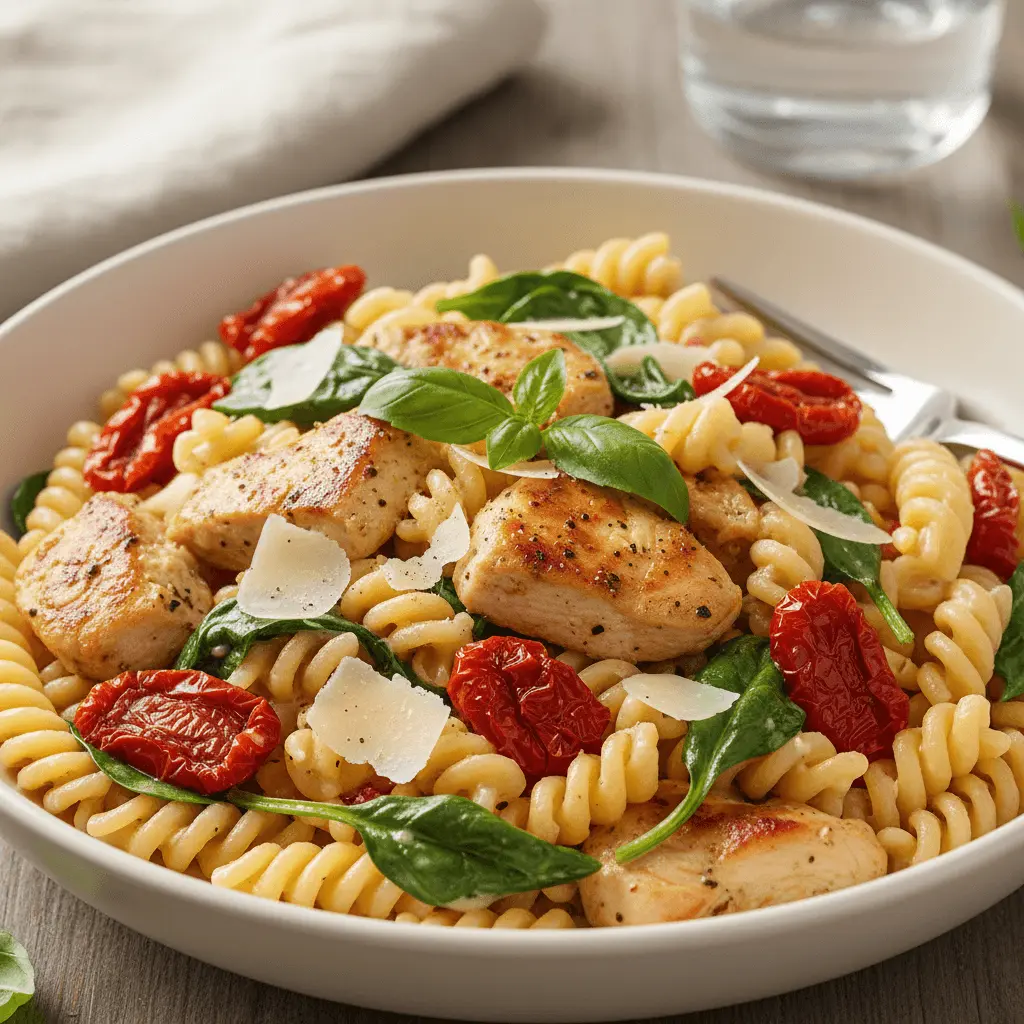
This delicious chicken and sun-dried tomato pasta recipe makes creating healthy pasta recipes straightforward and enjoyable. Follow these steps for a satisfying meal.
- Prepare Your Pasta: Bring a large pot of salted water to a boil. Add the 10 ounces of short pasta (whole wheat, lentil, or gluten-free options work great) and cook according to package directions until al dente. Drain well.
- Cook Proteins and Vegetables: While the pasta cooks, chop 1.5 pounds of boneless, skinless chicken breast into 1-inch pieces. In a bowl, toss the chicken with 2 tablespoons of olive oil, 3-4 minced garlic cloves, 2 teaspoons of Italian seasoning, and season with Kosher salt and ground pepper. Heat a large frying pan over medium-high heat. Add the seasoned chicken in a single layer and cook undisturbed for 2-3 minutes until golden brown. Stir in 8 ounces of drained and chopped sun-dried tomatoes (use the oil from the jar for extra flavor if desired) and continue cooking until the chicken is cooked through, which takes about 5-7 minutes.
- Whip Up a Light Sauce: In a small bowl, whisk together 3 cups of 2% milk (or any other milk, or lite coconut cream for a dairy-free option) and 2 tablespoons of gluten-free flour (or cornstarch) until no lumps remain.
- Combine and Toss: Pour the milk mixture over the cooked chicken and sun-dried tomatoes in the pan. Mix well to combine everything. Allow the sauce to bubble gently for 3-4 minutes to thicken, stirring occasionally.
- Serve Immediately: Once the sauce is ready, add 3 cups of chopped baby spinach to the pan and stir until it wilts into the sauce. Finally, add the cooked pasta and 1/2 cup of Parmesan cheese, stirring thoroughly to combine all ingredients. Serve your fresh, warm, and utterly delicious healthy pasta recipe right away.
Pro Tips for Perfect Healthy Pasta
Elevate your healthy pasta recipes with these expert tips, ensuring delicious results every time.
Achieving Optimal Texture
Always cook pasta to al dente for the best texture and satiety. Reserve some pasta water; its starch helps thicken and emulsify your sauce beautifully.
Maximizing Flavor Naturally
Infuse dishes with fresh herbs and garlic for vibrant taste. A squeeze of lemon zest or a splash of vinegar can brighten flavors. Layer spices and seasonings throughout cooking to build complexity.
Portion Control & Mindful Eating
Understand appropriate serving sizes for pasta, typically around 1 cup cooked. Balance your plate with plenty of vegetables to increase volume and nutrients. Listen to your body’s hunger and fullness cues for mindful enjoyment.
Clever Meal Prepping
Cook pasta separately and store it in an airtight container for meal prep. Keep sauces and other components in individual containers. Reheat gently, perhaps with a splash of broth, to maintain pasta texture and prevent sogginess.
Serving, Storage, and Variations
Make your healthy pasta recipes a complete and versatile meal with these suggestions.
Complementary Sides
Pair your pasta with a crisp, fresh green salad tossed with a light vinaigrette. For extra flavor, include a side of whole-grain garlic bread. Roasted vegetables like asparagus or bell peppers also make an excellent addition.
Flavorful Variations
- Mediterranean Twist: Add crumbled feta cheese, kalamata olives, and chopped artichoke hearts for a zesty profile.
- Spicy Kick: Introduce a pinch of chili flakes or use a spicy chicken sausage to ignite the flavor.
- Creamy Vegan: Incorporate nutritional yeast for a cheesy taste and blend a plant-based milk with cashews for rich creaminess.
Storing Leftovers
Allow your pasta dish to cool completely before refrigerating. Store leftovers in airtight containers for 3-4 days. For best results when freezing, freeze the sauce and components separately, adding freshly cooked pasta when ready to reheat.
Healthy Pasta Nutrition Overview
Healthy pasta recipes provide a well-rounded meal, focusing on nutrient density. Whole grain pasta contributes valuable fiber for digestive health. Lean protein sources offer satiety and support muscle maintenance. Abundant vegetables deliver essential vitamins, minerals, and antioxidants. This combination ensures a balanced macronutrient profile, making your meal both nutritious and satisfying.
| Nutrition Component | Per Serving (Approximate) |
|---|---|
| Calories | 350-450 |
| Protein | 25-30g |
| Carbohydrates | 40-50g |
| Fiber | 6-8g |
| Fat | 10-15g |
Note: Nutritional values are approximate and will vary based on specific ingredients and portion sizes.
Healthy Pasta FAQs
Do you have questions about making the most of your healthy pasta recipes? We have answers.
- What makes a pasta recipe “healthy”? A healthy pasta recipe balances whole grains or vegetable noodles with lean protein, abundant vegetables, and light, flavorful sauces, limiting excessive fats or sugars.
- Can I use gluten-free pasta? Absolutely! Gluten-free pasta is an excellent substitute, ensuring your dish is suitable for those with dietary restrictions.
- How can I add more vegetables to my pasta? Incorporate finely chopped vegetables directly into your sauce or stir in leafy greens like spinach or kale at the end. Roasted vegetables also make a great topping.
- What are some quick healthy pasta sauce ideas? Simple options include homemade marinara, pesto lightened with broth, or olive oil and garlic tossed with fresh tomatoes.
- Is pasta good for weight loss? Yes, in moderation. When combined with lean proteins and lots of vegetables, whole-grain pasta can be a satisfying part of a balanced, calorie-controlled diet for weight loss.
Conclusion
Embracing healthy pasta recipes transforms a simple ingredient into an incredibly versatile and nutritious meal. It’s easy to create dishes that are both delicious and beneficial for your well-being. We encourage you to experiment with different proteins, vegetables, and sauces to discover your family’s new favorite wholesome pasta creations. Enjoy the process of crafting balanced, flavorful meals that nourish your body and delight your taste buds!